あTokiwa Labo Japanese

JLPT N3 Listening Practice Test 1

Answers and script for all 28 questions.

Answer key

{問題|もんだい}1Task-based comprehension

  1. 13
  2. 21
  3. 34
  4. 42
  5. 54
  6. 63

{問題|もんだい}2Comprehension of key points

  1. 12
  2. 24
  3. 33
  4. 41
  5. 52
  6. 63

{問題|もんだい}3Comprehension of general outline

  1. 14
  2. 21
  3. 32

{問題|もんだい}4Verbal expressions

  1. 12
  2. 21
  3. 33
  4. 42

{問題|もんだい}5Quick response

  1. 11
  2. 23
  3. 32
  4. 43
  5. 51
  6. 62
  7. 72
  8. 83
  9. 91

Practice for the JLPT every day

Tokiwa Labo Japanese has vocab reviews, grammar drills and JLPT-style practice questions for N5 through N3. Early access opens in January 2027, and waitlist members get 30% off their first year.

or use your email

We'll email you when your invite is ready. No spam, unsubscribe anytime.

This site is protected by reCAPTCHA and the Google Privacy Policy and Terms of Service apply.

{問題|もんだい}1Task-based comprehension

1番Question 1

Replay in the video

男(おとこ)の人(ひと)はこのあとまず何(なに)をしなければなりませんか。

  1. 1. 資料(しりょう)をコピーする

    He should have the department head check the handouts before copying them, so copying is not first.

  2. 2. 部長(ぶちょう)に資料(しりょう)を見(み)てもらう

    The department head is out until the afternoon, so this has to wait.

  3. 3. 別(べつ)の会議室(かいぎしつ)を予約(よやく)するCorrect answer

    The room he booked has a broken air conditioner and other rooms are filling up, so the woman tells him to hurry and get another room. The department head has to check the handouts before they are copied, but he is out until the afternoon.

  4. 4. A社(しゃ)にメールを送(おく)る

    The email should be sent only after the meeting place is decided.

Script

Narrator

会社(かいしゃ)で女(おんな)の人(ひと)と男(おとこ)の人(ひと)が話(はな)しています。

A woman and a man are talking at a company.

Narrator

男(おとこ)の人(ひと)はこのあとまず何(なに)をしなければなりませんか。

What does the man have to do first after this?
Woman

明日(あした)のA社(しゃ)との打(う)ち合(あ)わせの準備(じゅんび)なんだけど、資料(しりょう)はもうできてる?

About getting ready for tomorrow's meeting with Company A: are the handouts done?

Man

はい。これから人数(にんずう)分(ぶん)コピーしようと思(おも)っていたところです。

Yes. I was just about to make a copy for everyone.

Woman

コピーする前(まえ)に、一度(いちど)部長(ぶちょう)に見(み)てもらったほうがいいよ。数字(すうじ)が変(か)わったところもあるし。

Before you copy them, you should have the department head look at them once. Some of the numbers have changed.

Man

そうですね。でも部長(ぶちょう)は午後(ごご)まで外出(がいしゅつ)されているみたいで…。

That's true. But it seems the department head is out until the afternoon...

Woman

じゃあ、戻(もど)られてからでいいよ。それより、予約(よやく)してくれた第(だい)二(に)会議室(かいぎしつ)、エアコンが壊(こわ)れてるって、さっき連絡(れんらく)があったの。

Then it can wait until he's back. More importantly, I just heard that the air conditioner in Meeting Room 2, the one you booked, is broken.

Man

え、そうなんですか。じゃあ、ほかの部屋(へや)を取(と)らないと。

Oh, really? Then I need to get another room.

Woman

うん。ほかの部屋(へや)もけっこう予約(よやく)が入(はい)ってるみたいだから、急(いそ)いだほうがいいよ。A社(しゃ)へのメールは、場所(ばしょ)が決(き)まってから送(おく)ればいいから。

Yes. The other rooms seem to be pretty booked up too, so you'd better hurry. You can send the email to Company A once the place is decided.

Man

わかりました。すぐやります。

Understood. I'll do it right away.

Narrator

男(おとこ)の人(ひと)はこのあとまず何(なに)をしなければなりませんか。

What does the man have to do first after this?
2番Question 2

Replay in the video

男(おとこ)の学生(がくせい)はレポートをどのように直(なお)しますか。

  1. 1. アンケートの問題(もんだい)点(てん)を書(か)くCorrect answer

    The teacher says there is no time to survey more people, so he should instead write at the end that the small number of people limits what he can say. The student first offers to collect more answers, but the teacher talks him out of it.

  2. 2. アンケートをもっと集(あつ)める

    The teacher says there is not enough time before the deadline to collect more answers.

  3. 3. まとめを短(みじか)くする

    The teacher says the summary is fine as it is.

  4. 4. グラフをもっと入(い)れる

    The teacher says more graphs would make the report harder to read.

Script

Narrator

大学(だいがく)で男(おとこ)の学生(がくせい)と女(おんな)の先生(せんせい)が話(はな)しています。

A male student and a female teacher are talking at a university.

Narrator

男(おとこ)の学生(がくせい)はレポートをどのように直(なお)しますか。

How will the student revise his report?

Man

先生(せんせい)、先週(せんしゅう)出(だ)したレポートのことなんですが、今(いま)お時間(じかん)よろしいでしょうか。

Professor, it's about the report I handed in last week. Do you have a moment now?

Woman

ええ。全体的(ぜんたいてき)にはよく書(か)けていましたよ。ただ、アンケートに答(こた)えた人(ひと)が三十人(さんじゅうにん)だけだと、ちょっと少(すく)ないかな。

Yes. On the whole it was well written. But only thirty people answering the survey is a bit few.

Man

やはりそうですか。じゃあ、もう少(すこ)し集(あつ)めて、書(か)き直(なお)します。

I thought so. Then I'll collect some more and rewrite it.

Woman

うーん、締(し)め切(き)りまで一週間(いっしゅうかん)しかないから、今(いま)から集(あつ)めるのは大変(たいへん)でしょう。それより、人数(にんずう)が少(すく)ないためにはっきり言(い)えないこともある、ということを最後(さいご)に書(か)いておけばいいですよ。

Hmm, there's only a week until the deadline, so collecting more now would be hard. Instead, just write at the end that because the number of people was small, there are things you can't say for certain.

Man

わかりました。あの、まとめが長(なが)すぎるかなとも思(おも)っていたんですが…。

I see. Um, I was also wondering if the summary was too long...

Woman

まとめはあのままで大丈夫(だいじょうぶ)ですよ。

The summary is fine as it is.

Man

よかったです。あと、グラフはもう少(すこ)し入(い)れたほうが…。

That's good. Also, should I add a few more graphs...

Woman

いえ、グラフはあれで十分(じゅうぶん)。多(おお)すぎると、かえって読(よ)みにくくなりますよ。

No, the graphs are enough as they are. Too many would actually make it harder to read.

Narrator

男(おとこ)の学生(がくせい)はレポートをどのように直(なお)しますか。

How will the student revise his report?

3番Question 3

Replay in the video

女(おんな)の人(ひと)はこのあとまず何(なに)をしますか。

  1. 1. テーブルをふく

    The manager says the tables come after tying her hair and washing her hands.

  2. 2. 手(て)を洗(あら)う

    She washes her hands only after tying up her hair.

  3. 3. はしとメニューを並(なら)べる

    The chopsticks and menus come with the tables, after her hair and hands.

  4. 4. 事務所(じむしょ)へ行(い)くCorrect answer

    She has to tie up her hair before anything else, and the hair ties are in the office, so she goes there first. Washing her hands comes after tying her hair, and the tables come after that.

Script

Narrator

レストランで店長(てんちょう)と新(あたら)しいアルバイトの女(おんな)の人(ひと)が話(はな)しています。

At a restaurant, the manager and a new part-time worker, a woman, are talking.

Narrator

女(おんな)の人(ひと)はこのあとまず何(なに)をしますか。

What will the woman do first after this?

Man

今日(きょう)からよろしくね。お客(きゃく)さんが来(く)る前(まえ)に、テーブルを全部(ぜんぶ)ふいて、はしとメニューを並(なら)べてくれる?

Glad to have you from today. Before customers arrive, could you wipe all the tables and set out the chopsticks and menus?

Woman

はい、わかりました。

Sure, got it.

Man

あ、ちょっと待(ま)って。その前(まえ)に、その長(なが)い髪(かみ)、まとめてくれる?料理(りょうり)を運(はこ)ぶ仕事(しごと)だから、決(き)まりなんだ。

Oh, wait a moment. Before that, could you tie up that long hair? You'll be carrying food, so it's a rule.

Woman

あ、すみません。ゴムを持(も)ってくるのを忘(わす)れてしまって…。

Oh, sorry. I forgot to bring a hair tie...

Man

そっか。じゃあ、事務所(じむしょ)の机(つくえ)の引(ひ)き出(だ)しに入(はい)ってるから、使(つか)っていいよ。

I see. There are some in the desk drawer in the office, so feel free to use one.

Woman

ありがとうございます。じゃ、すぐ取(と)ってきます。

Thank you. I'll go get one right away.

Man

うん。髪(かみ)をまとめたら、手(て)も洗(あら)っておいてね。テーブルはそのあとでいいから。

Okay. After you tie your hair, wash your hands too. The tables can come after that.

Woman

はい。

Okay.

Narrator

女(おんな)の人(ひと)はこのあとまず何(なに)をしますか。

What will the woman do first after this?

4番Question 4

Replay in the video

男(おとこ)の人(ひと)はこのあと何(なに)をしなければなりませんか。

  1. 1. リモコンの電池(でんち)を替(か)える

    He has already changed the batteries and it still doesn't work.

  2. 2. エアコンの番号(ばんごう)を知(し)らせるCorrect answer

    The message asks him to email the number written on the side of the air conditioner, because the repair company depends on the type of machine. The company will then contact him with the repair date.

  3. 3. 修理(しゅうり)に来(き)てほしい日(ひ)を知(し)らせる

    The company will tell him the repair date once it has the number; he isn't asked for a day.

  4. 4. 修理代(しゅうりだい)を払(はら)う

    The repair costs him nothing.

Script

Narrator

男(おとこ)の人(ひと)が留守(るす)番(ばん)電話(でんわ)のメッセージを聞(き)いています。

A man is listening to a message on his answering machine.

Narrator

男(おとこ)の人(ひと)はこのあと何(なに)をしなければなりませんか。

What does the man have to do after this?

Woman

もしもし、さくら不動産(ふどうさん)の中村(なかむら)です。ひかり荘(そう)203号室(ごうしつ)の田中様(たなかさま)に、エアコンの件(けん)でお電話(でんわ)いたしました。リモコンの電池(でんち)を替(か)えても動(うご)かないということでしたので、修理(しゅうり)をお願(ねが)いすることにいたしました。ただ、エアコンの種類(しゅるい)によって修理(しゅうり)をする会社(かいしゃ)が違(ちが)いますので、エアコンの横(よこ)に書(か)いてある番号(ばんごう)を、メールでお送(おく)りいただけますか。番号(ばんごう)がわかりましたら、修理(しゅうり)の日(ひ)をこちらからご連絡(れんらく)いたします。なお、修理代(しゅうりだい)はかかりません。よろしくお願(ねが)いいたします。

Hello, this is Nakamura from Sakura Real Estate. I'm calling Mr. Tanaka in room 203 of Hikari-so about the air conditioner. You said it still doesn't work even after changing the remote's batteries, so we have arranged a repair. However, the company that does the repair depends on the type of air conditioner, so could you email us the number written on the side of the air conditioner? Once we have the number, we'll contact you about the repair date. There is no charge for the repair. Thank you.

Narrator

男(おとこ)の人(ひと)はこのあと何(なに)をしなければなりませんか。

What does the man have to do after this?

5番Question 5

Replay in the video

女(おんな)の人(ひと)は来週(らいしゅう)、何(なに)を持(も)っていきますか。

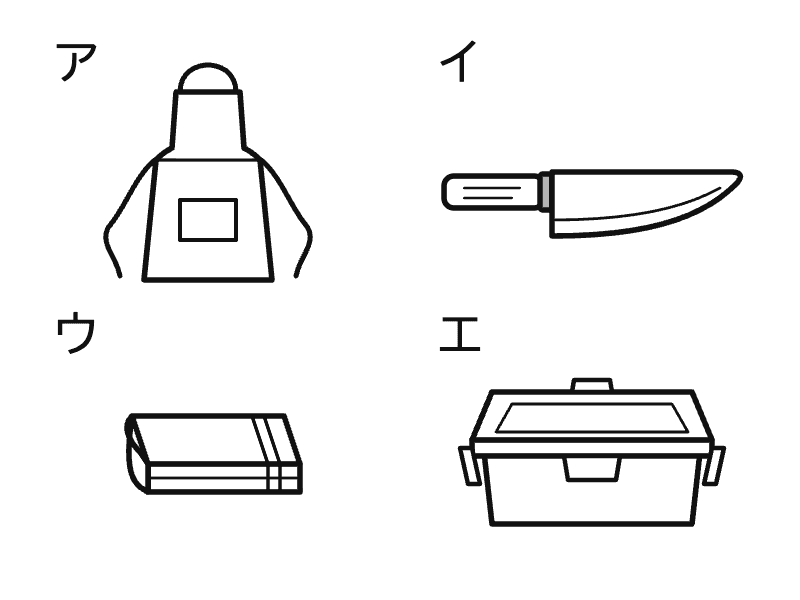
Four separate everyday objects on a plain empty background, arranged two by two with clear space between them, each drawn large and seen slightly from above, with its katakana label in a small circle just above its top-left corner. ア (top left): a cloth cooking apron, a full bib apron with a neck loop and two long waist ties hanging loose, laid flat. イ (top right): a Japanese kitchen knife (包丁) lying flat, wooden handle on the left, broad blade pointing right. ウ (bottom left): a small hand towel folded into a neat rectangle, plain, no ties or straps, smaller than the apron. エ (bottom right): an empty rectangular plastic food container with its lid on (a タッパー), a hard box with clip tabs on the lid. No people, no table edges, no other objects and no writing except the four labels ア イ ウ エ. Items: ア an apron; イ a kitchen knife; ウ a towel; エ a food container.
  1. 1. アイウエ(エプロンと包丁(ほうちょう)とタオルと容器(ようき))

    The school has knives and lends aprons free for the first month, so she brings neither.

  2. 2. アウエ(エプロンとタオルと容器(ようき))

    She doesn't need her own apron: the school lends one free for the first month.

  3. 3. イウエ(包丁(ほうちょう)とタオルと容器(ようき))

    The school has knives, so she doesn't bring one.

  4. 4. ウエ(タオルと容器(ようき))Correct answer

    She was asked to bring an apron, a towel and a container, but the school lends aprons free for the first month and she will borrow one, so she brings only the towel and the container. Knives are provided by the school.

Script

Narrator

料理(りょうり)教室(きょうしつ)で、受付(うけつけ)の人(ひと)と女(おんな)の人(ひと)が話(はな)しています。

At a cooking school, a receptionist and a woman are talking.

Narrator

女(おんな)の人(ひと)は来週(らいしゅう)、何(なに)を持(も)っていきますか。

What will the woman take with her next week?

Woman

すみません、来週(らいしゅう)からこちらに通(かよ)うことになった山下(やました)です。何(なに)を持(も)ってくればいいか教(おし)えていただけますか。

Excuse me, I'm Yamashita, starting classes here next week. Could you tell me what I should bring?

Man

はい。エプロンとタオル、それから、作(つく)った料理(りょうり)を持(も)って帰(かえ)るための容器(ようき)をお願(ねが)いします。

Certainly. Please bring an apron and a towel, and also a container to take home the food you make.

Woman

包丁(ほうちょう)も持(も)ってきたほうがいいですか。

Should I bring a knife too?

Man

いえ、包丁(ほうちょう)は教室(きょうしつ)にございますので、けっこうです。

No, there are knives in the classroom, so that's not necessary.

Woman

わかりました。あの、エプロンはまだ持(も)っていないので、これから買(か)おうと思(おも)っているんですが。

I see. Um, I don't have an apron yet, so I was thinking of buying one.

Man

それでしたら、最初(さいしょ)の一(いっ)か月(げつ)は、教室(きょうしつ)のエプロンを無料(むりょう)でお貸(か)ししていますよ。

In that case, for the first month we lend out the school's aprons free of charge.

Woman

そうなんですか。じゃあ、来週(らいしゅう)はお借(か)りします。

Oh, really? Then I'll borrow one next week.

Narrator

女(おんな)の人(ひと)は来週(らいしゅう)、何(なに)を持(も)っていきますか。

What will the woman take with her next week?

6番Question 6

Replay in the video

女(おんな)の人(ひと)は何(なに)を買(か)いますか。

  1. 1. 花(はな)

    Flowers would be hard to take back to her country.

  2. 2. 写真(しゃしん)のアルバム

    There is not enough time to take the photos and make an album.

  3. 3. コーヒー豆(まめ)Correct answer

    They settle on coffee beans because they are light and hard to buy in her country, and the woman says she will buy them tomorrow. The mug was rejected because it could break.

  4. 4. 名前(なまえ)入(い)りのコーヒーカップ

    A mug could break, so they want something lighter.

Script

Narrator

男(おとこ)の人(ひと)と女(おんな)の人(ひと)が、友達(ともだち)のお別(わか)れ会(かい)について話(はな)しています。

A man and a woman are talking about a farewell party for a friend.

Narrator

女(おんな)の人(ひと)は何(なに)を買(か)いますか。

What will the woman buy?

Man

来週(らいしゅう)のお別(わか)れ会(かい)、山本(やまもと)さんへのプレゼント、何(なに)にする?花(はな)とか?

For next week's farewell party, what should we get Yamamoto as a present? Flowers, maybe?

Woman

国(くに)に帰(かえ)るんだから、花(はな)は持(も)って帰(かえ)るのが大変(たいへん)じゃない?みんなで写真(しゃしん)を撮(と)って、アルバムにするのはどう?

She's going back to her country, so wouldn't flowers be hard to take home? How about we all take photos and make an album?

Man

いいね。でも、来週(らいしゅう)までに作(つく)るのは無理(むり)じゃない?写真(しゃしん)もまだ撮(と)ってないし。

Nice. But isn't it impossible to make by next week? We haven't even taken the photos.

Woman

そっか。じゃあ、何(なに)か使(つか)えるものがいいかな。山本(やまもと)さん、コーヒー好(す)きだよね。名前(なまえ)を入(い)れてくれるカップのお店(みせ)、駅前(えきまえ)にあるよ。

Right. Then maybe something useful is better. Yamamoto likes coffee, doesn't she? There's a shop by the station that will put a name on a mug.

Man

うーん、割(わ)れたら困(こま)るし、軽(かる)いもののほうがいいんじゃない?

Hmm, it would be a shame if it broke, and something light would be better, wouldn't it?

Woman

じゃあ、コーヒー豆(まめ)は?日本(にほん)のお店(みせ)のって、向(む)こうではなかなか買(か)えないらしいよ。

Then how about coffee beans? Apparently beans from Japanese shops are hard to get over there.

Man

それいいね。じゃ、それにしよう。

That's good. Let's go with that.

Woman

うん。じゃ、私(わたし)が明日(あした)買(か)ってくるね。

Okay. Then I'll go buy them tomorrow.

Narrator

女(おんな)の人(ひと)は何(なに)を買(か)いますか。

What will the woman buy?

{問題|もんだい}2Comprehension of key points

1番Question 1

Replay in the video

女(おんな)の人(ひと)はどうして自転車(じてんしゃ)で会社(かいしゃ)に来(く)るようになりましたか。

  1. 1. 運動(うんどう)不足(ふそく)だから

    She says the exercise is a result, not the reason.

  2. 2. 駅(えき)で時間(じかん)がかかるからCorrect answer

    Construction at the station made getting out of the station very slow, so she switched to cycling. The exercise is only a side effect, as she says herself.

  3. 3. 交通費(こうつうひ)を節約(せつやく)したいから

    The company pays her fares, so money is not the reason.

  4. 4. 電車(でんしゃ)がいつも込(こ)んでいるから

    She never says the trains are crowded; the problem is the construction at the station.

Script

Narrator

会社(かいしゃ)で男(おとこ)の人(ひと)と女(おんな)の人(ひと)が話(はな)しています。

A man and a woman are talking at a company.

Narrator

女(おんな)の人(ひと)はどうして自転車(じてんしゃ)で会社(かいしゃ)に来(く)るようになりましたか。

Why did the woman start coming to work by bicycle?

Man

あれ、今日(きょう)も自転車(じてんしゃ)?最近(さいきん)ずっとだよね。健康(けんこう)のため?運動(うんどう)不足(ふそく)だって言(い)ってたもんね。

Huh, by bike again today? You've been doing that a lot lately. For your health? You did say you don't get enough exercise.

Woman

まあ、結果的(けっかてき)には運動(うんどう)になってるけど、それが理由(りゆう)じゃないの。

Well, it does end up being exercise, but that's not the reason.

Man

じゃ、交通費(こうつうひ)の節約(せつやく)?

Then to save on fares?

Woman

ううん、交通費(こうつうひ)は会社(かいしゃ)が出(だ)してくれるから。実(じつ)はね、先月(せんげつ)から駅(えき)で工事(こうじ)が始(はじ)まって、電車(でんしゃ)を降(お)りてから改札(かいさつ)を出(で)るまで、すごく時間(じかん)がかかるようになったの。

No, the company pays my fares. Actually, construction started at the station last month, and now it takes ages to get from the train to the ticket gates.

Man

ああ、あの工事(こうじ)ね。

Ah, that construction.

Woman

それで、毎朝(まいあさ)遅刻(ちこく)しそうになっちゃって。自転車(じてんしゃ)なら二十分(にじゅっぷん)くらいだし、時間(じかん)も読(よ)みやすいんだよね。

So I was nearly late every morning. By bike it's about twenty minutes, and it's easier to know how long it will take.

Narrator

女(おんな)の人(ひと)はどうして自転車(じてんしゃ)で会社(かいしゃ)に来(く)るようになりましたか。

Why did the woman start coming to work by bicycle?

2番Question 2

Replay in the video

男(おとこ)の人(ひと)はどうしてその旅館(りょかん)を選(えら)びましたか。

  1. 1. 値段(ねだん)が安(やす)かったから

    He says it was more expensive than other inns.

  2. 2. 温泉(おんせん)がよかったから

    He says the hot spring was ordinary.

  3. 3. 部屋(へや)から海(うみ)が見(み)えるから

    The room actually only had a view of trees.

  4. 4. ペットと一緒(いっしょ)に泊(と)まれるからCorrect answer

    It was the only inn in the area where he could stay with his dog. It was more expensive than others, the hot spring was ordinary, and the sea view turned out to be trees.

Script

Narrator

男(おとこ)の人(ひと)と女(おんな)の人(ひと)が旅行(りょこう)について話(はな)しています。

A man and a woman are talking about a trip.

Narrator

男(おとこ)の人(ひと)はどうしてその旅館(りょかん)を選(えら)びましたか。

Why did the man choose that inn?

Woman

週末(しゅうまつ)、温泉(おんせん)に行(い)ってきたんでしょう?どうだった?

You went to a hot spring at the weekend, didn't you? How was it?

Man

うん、よかったよ。駅(えき)からちょっと遠(とお)かったけど。

Yeah, it was good. It was a bit far from the station, though.

Woman

じゃ、なんでそこにしたの?安(やす)かったとか?

Then why did you pick that place? Was it cheap or something?

Man

いや、むしろほかより高(たか)かったくらい。

No, if anything it was more expensive than the others.

Woman

えー。じゃ、温泉(おんせん)が有名(ゆうめい)なところ?

Really? Then is it a place famous for its hot spring?

Man

温泉(おんせん)は普通(ふつう)かな。部屋(へや)から海(うみ)が見(み)えるって書(か)いてあったけど、実際(じっさい)は木(き)しか見(み)えなかったし。

The hot spring was ordinary. It said you could see the sea from the room, but actually all I could see were trees.

Woman

なにそれ。じゃ、何(なに)がよかったの?

What? Then what was good about it?

Man

うち、犬(いぬ)がいるでしょう。あのあたりで犬(いぬ)と一緒(いっしょ)に泊(と)まれるのは、そこしかなかったんだよ。

We have a dog, remember. That was the only place around there where you can stay with a dog.

Narrator

男(おとこ)の人(ひと)はどうしてその旅館(りょかん)を選(えら)びましたか。

Why did the man choose that inn?

3番Question 3

Replay in the video

女(おんな)のお客(きゃく)さんは、掃除(そうじ)機(き)の何(なに)が問題(もんだい)だと言(い)っていますか。

  1. 1. ゴミをよく吸(す)わない

    She says it picks up dirt well.

  2. 2. 音(おと)がうるさい

    She says it is quiet.

  3. 3. 長(なが)い時間(じかん)使(つか)えないCorrect answer

    The manual says it runs for forty minutes, but it stops after about ten. She says the suction, the noise and the weight are all fine.

  4. 4. 重(おも)くて使(つか)いにくい

    She says the weight is just right.

Script

Narrator

電気屋(でんきや)で店(みせ)の人(ひと)と女(おんな)のお客(きゃく)さんが話(はな)しています。

At an electronics shop, a clerk and a female customer are talking.

Narrator

女(おんな)のお客(きゃく)さんは、掃除(そうじ)機(き)の何(なに)が問題(もんだい)だと言(い)っていますか。

What does the customer say is the problem with the vacuum cleaner?

Woman

すみません。先週(せんしゅう)こちらで買(か)った掃除(そうじ)機(き)なんですが、ちょっと見(み)ていただけますか。

Excuse me. It's a vacuum cleaner I bought here last week. Could you take a look at it?

Man

はい、拝見(はいけん)します。ゴミがうまく吸(す)えないとか、そういったことでしょうか。

Certainly, let me see. Is it something like not picking up dirt properly?

Woman

いえ、よく吸(す)ってくれますし、音(おと)も静(しず)かで、重(おも)さもちょうどいいんです。ただ、説明書(せつめいしょ)には四十分(よんじゅっぷん)使(つか)えるって書(か)いてあったのに、十分(じゅっぷん)ぐらいで止(と)まってしまうんです。

No, it picks things up well, it's quiet, and the weight is just right. It's just that the manual said it runs for forty minutes, but it stops after about ten.

Man

もしかすると、パワーを一番(いちばん)強(つよ)くしてお使(つか)いではないでしょうか。強(つよ)くすると、電池(でんち)の減(へ)りが早(はや)くなるんですが。

Could it be that you're using it on the strongest power setting? On the strongest setting, the battery runs down faster.

Woman

いえ、ずっと普通(ふつう)の強(つよ)さで使(つか)っています。

No, I've always used it on the normal setting.

Man

そうですか。失礼(しつれい)いたしました。では、お預(あず)かりして、すぐにお調(しら)べいたします。

I see. I do apologize. Then we'll take it in and look into it right away.

Narrator

女(おんな)のお客(きゃく)さんは、掃除(そうじ)機(き)の何(なに)が問題(もんだい)だと言(い)っていますか。

What does the customer say is the problem with the vacuum cleaner?

4番Question 4

Replay in the video

パン屋(や)の主人(しゅじん)は、パン作(づく)りで一番(いちばん)大切(たいせつ)なことは何(なん)だと言(い)っていますか。

  1. 1. 天気(てんき)によって作(つく)り方(かた)を変(か)えることCorrect answer

    He says what he pays most attention to is the weather, and he changes the water and mixing time every morning. 'To make the same bread' is about the result; he says what he does must change every day.

  2. 2. いい材料(ざいりょう)を使(つか)うこと

    He says his flour is the ordinary kind anyone can buy.

  3. 3. 焼(や)き方(かた)を変(か)えないこと

    He hasn't changed his baking method, but he doesn't call that the most important thing.

  4. 4. 毎日(まいにち)同(おな)じ作(つく)り方(かた)をすること

    He says he has to do something different every day to get the same bread.

Script

Narrator

ラジオで、アナウンサーとパン屋(や)の主人(しゅじん)が話(はな)しています。

On the radio, an announcer and a bakery owner are talking.

Narrator

パン屋(や)の主人(しゅじん)は、パン作(づく)りで一番(いちばん)大切(たいせつ)なことは何(なん)だと言(い)っていますか。

What does the bakery owner say is the most important thing in making bread?

Woman

今日(きょう)は、駅前(えきまえ)で三十年(さんじゅうねん)続(つづ)くパン屋(や)のご主人(しゅじん)にお話(はなし)を伺(うかが)います。いつもお客(きゃく)さんが並(なら)んでいますが、やはり材料(ざいりょう)が特別(とくべつ)なんですか。

Today we're talking to the owner of a bakery that has been in front of the station for thirty years. There's always a line; is it because your ingredients are special?

Man

いえ、うちの小麦粉(こむぎこ)は、普通(ふつう)のお店(みせ)で買(か)えるものなんですよ。

No, our flour is the kind you can buy at an ordinary shop.

Woman

そうなんですか。では、焼(や)き方(かた)に秘密(ひみつ)が?

Is that so? Then is the secret in how you bake?

Man

焼(や)き方(かた)も昔(むかし)から変(か)えていません。私(わたし)が一番(いちばん)気(き)をつけているのは、その日(ひ)の天気(てんき)なんです。

I haven't changed how I bake for years either. What I pay the most attention to is the day's weather.

Woman

天気(てんき)、ですか。

The weather?

Man

ええ。暑(あつ)い日(ひ)や雨(あめ)の日(ひ)は、パンの生地(きじ)の状態(じょうたい)が全然(ぜんぜん)違(ちが)うんです。だから毎朝(まいあさ)、気温(きおん)や空気(くうき)の乾(かわ)き具合(ぐあい)を確(たし)かめて、水(みず)の量(りょう)や混(ま)ぜる時間(じかん)を変(か)えるんです。

Yes. On hot days or rainy days the dough behaves completely differently. So every morning I check the temperature and how dry the air is, and change the amount of water and the mixing time.

Woman

毎日(まいにち)同(おな)じではないんですね。

So it's not the same every day.

Man

ええ。同(おな)じパンを作(つく)るために、毎日(まいにち)違(ちが)うことをしているんです。

Right. To make the same bread, I do something different every day.

Narrator

パン屋(や)の主人(しゅじん)は、パン作(づく)りで一番(いちばん)大切(たいせつ)なことは何(なん)だと言(い)っていますか。

What does the bakery owner say is the most important thing in making bread?

5番Question 5

Replay in the video

男(おとこ)の人(ひと)は、トマトがうまく育(そだ)たなかった一番(いちばん)の原因(げんいん)は何(なん)だと言(い)っていますか。

  1. 1. 水(みず)が足(た)りなかったこと

    He watered them every morning and night, so they had plenty of water.

  2. 2. 日(ひ)があまり当(あ)たらなかったことCorrect answer

    He says the biggest reason was the location: his balcony faces north and gets only a little morning sun. Too much water may have played a part, but he says it was not the main cause.

  3. 3. 水(みず)をあげすぎたこと

    He says over-watering may be part of it, but the biggest reason was the location.

  4. 4. 暑(あつ)すぎたこと

    The woman mentions the heat, but the man never says it was the cause.

Script

Narrator

男(おとこ)の人(ひと)と女(おんな)の人(ひと)が、ベランダで育(そだ)てている野菜(やさい)について話(はな)しています。

A man and a woman are talking about vegetables grown on a balcony.

Narrator

男(おとこ)の人(ひと)は、トマトがうまく育(そだ)たなかった一番(いちばん)の原因(げんいん)は何(なん)だと言(い)っていますか。

What does the man say was the main reason his tomatoes didn't grow well?

Woman

去年(きょねん)、ベランダでトマト育(そだ)ててたよね。どうだった?

You were growing tomatoes on your balcony last year, weren't you? How did it go?

Man

それがさ、全然(ぜんぜん)だめだったんだ。小(ちい)さいのが三(みっ)つぐらいしかできなくて。

Well, it was a total failure. I only got about three small ones.

Woman

水(みず)が足(た)りなかったんじゃない?夏(なつ)、暑(あつ)かったし。

Maybe they didn't get enough water? It was hot last summer.

Man

僕(ぼく)もそう思(おも)って、毎日(まいにち)朝(あさ)と夜(よる)にあげてたんだよ。でも、トマトって水(みず)をあげすぎると、かえってよくないらしいんだ。

I thought so too, so I watered them every morning and night. But it seems giving tomatoes too much water is actually bad for them.

Woman

へえ。じゃ、それが原因(げんいん)?

Oh, really? So that was the cause?

Man

まあ、それもあるかもしれないけど、一番(いちばん)は場所(ばしょ)だね。うちのベランダ、北向(きたむ)きで、午前中(ごぜんちゅう)にちょっと日(ひ)が当(あ)たるだけなんだ。トマトって、日(ひ)がよく当(あ)たらないと、なかなか実(み)がならないんだって。

Well, that may be part of it, but the biggest thing was the location. My balcony faces north and only gets a little sun in the morning. Apparently tomatoes hardly fruit unless they get lots of sun.

Woman

そっか。じゃ、今年(ことし)はどうするの?

I see. So what will you do this year?

Man

日(ひ)がよく当(あ)たる両親(りょうしん)の家(いえ)の庭(にわ)を借(か)りることにしたよ。

I've decided to borrow the garden at my parents' place, which gets lots of sun.

Narrator

男(おとこ)の人(ひと)は、トマトがうまく育(そだ)たなかった一番(いちばん)の原因(げんいん)は何(なん)だと言(い)っていますか。

What does the man say was the main reason his tomatoes didn't grow well?

6番Question 6

Replay in the video

来月(らいげつ)から、図書館(としょかん)の何(なに)が変(か)わりますか。

  1. 1. 図書館(としょかん)を使(つか)える時間(じかん)

    Opening hours stay the same, 9 a.m. to 8 p.m.

  2. 2. 一度(いちど)に借(か)りられる本(ほん)の数(かず)

    The limit stays the same, at ten books.

  3. 3. 本(ほん)を返(かえ)せる場所(ばしょ)Correct answer

    From next month the drop box in front of the station can no longer be used, so books can only be returned at the library. Sunday opening has been pushed back to the month after next, so the closed days do not change next month.

  4. 4. 図書館(としょかん)が休(やす)みの日(ひ)

    Sunday opening was delayed to the month after next, so closed days don't change next month.

Script

Narrator

市立(しりつ)図書館(としょかん)で、係(かかり)の人(ひと)が話(はな)しています。

At the city library, a staff member is speaking.

Narrator

来月(らいげつ)から、図書館(としょかん)の何(なに)が変(か)わりますか。

From next month, what will change at the library?

Woman

本日(ほんじつ)も市立(しりつ)図書館(としょかん)をご利用(りよう)いただき、ありがとうございます。来月(らいげつ)からのサービスの変更(へんこう)について、お知(し)らせいたします。まず、開館(かいかん)時間(じかん)ですが、これまでどおり朝(あさ)九時(くじ)から夜(よる)八時(はちじ)までです。一度(いちど)に借(か)りられる本(ほん)の数(かず)も、これまでと同(おな)じ十冊(じゅっさつ)です。また、来月(らいげつ)から日曜日(にちようび)も開館(かいかん)する予定(よてい)でしたが、建物(たてもの)の工事(こうじ)が遅(おく)れているため、再来月(さらいげつ)からとなりました。来月(らいげつ)から変(か)わりますのは、本(ほん)の返(かえ)し方(かた)です。これまでは駅前(えきまえ)にある図書館(としょかん)のポストにも本(ほん)を返(かえ)すことができましたが、利用(りよう)する方(かた)が少(すく)ないため、来月(らいげつ)からこのポストは使(つか)えなくなります。本(ほん)は図書館(としょかん)のカウンターか、入(い)り口(ぐち)の横(よこ)のポストにお返(かえ)しください。ご理解(りかい)とご協力(きょうりょく)をお願(ねが)いいたします。

Thank you for using the city library today. We'd like to announce changes to our services from next month. First, opening hours stay the same as before, from 9 a.m. to 8 p.m. The number of books you can borrow at one time also stays the same, at ten. We had planned to open on Sundays from next month as well, but because building work is behind schedule, that will now start the month after next. What changes from next month is how you return books. Until now you could also return books to the library's drop box in front of the station, but because few people use it, that box can no longer be used from next month. Please return books to the library counter or the drop box beside the entrance. Thank you for your understanding and cooperation.

Narrator

来月(らいげつ)から、図書館(としょかん)の何(なに)が変(か)わりますか。

From next month, what will change at the library?

{問題|もんだい}3Comprehension of general outline

1番Question 1

Replay in the video

先生(せんせい)は何(なに)について話(はな)していますか。

  1. 1. 日記(にっき)の正(ただ)しい書(か)き方(かた)

    He says it can be short and simple; he isn't teaching a correct way to write one.

  2. 2. 日本語(にほんご)の間違(まちが)いの直(なお)し方(かた)

    He says he won't read the diaries to correct mistakes.

  3. 3. 難(むずか)しい言葉(ことば)の覚(おぼ)え方(かた)

    He says the students don't need to use difficult words.

  4. 4. 学生(がくせい)に日記(にっき)を書(か)かせる理由(りゆう)Correct answer

    The teacher announces the daily diary and then explains what writing it does for the students: they start thinking in Japanese and noticing new words. The rules he mentions (three lines, easy words) are details, not the main topic.

Script

Narrator

日本語(にほんご)学校(がっこう)で、先生(せんせい)が学生(がくせい)に話(はな)しています。

At a Japanese language school, a teacher is talking to the students.

Man

みなさん、来週(らいしゅう)から毎日(まいにち)、短(みじか)い日記(にっき)を書(か)いてもらうことにしました。長(なが)く書(か)く必要(ひつよう)はありません。三行(さんぎょう)でいいんです。それに、難(むずか)しい言葉(ことば)を使(つか)わなくてもかまいません。大切(たいせつ)なのは、毎日(まいにち)続(つづ)けることです。日記(にっき)を書(か)こうとすると、一日(いちにち)の中(なか)で何(なに)があったか、どう感(かん)じたかを、日本語(にほんご)で考(かんが)えるようになります。そうすると、今(いま)まで気(き)がつかなかった言葉(ことば)や表現(ひょうげん)にも、注意(ちゅうい)を向(む)けるようになるんです。間違(まちが)いを気(き)にする人(ひと)もいるかもしれませんが、私(わたし)は間違(まちが)いを直(なお)すために読(よ)むわけではありません。どんどん書(か)いてください。

Everyone, I've decided to have you write a short diary every day from next week. You don't need to write a lot. Three lines is fine. And it's okay not to use difficult words. What matters is keeping it up every day. When you try to write a diary, you start thinking in Japanese about what happened in your day and how you felt. Then you start paying attention to words and expressions you never noticed before. Some of you may worry about mistakes, but I'm not reading them to correct mistakes. Just write as much as you like.

Narrator

先生(せんせい)は何(なに)について話(はな)していますか。

What is the teacher talking about?

Narrator

1. 日記(にっき)の正(ただ)しい書(か)き方(かた)

The correct way to write a diary

Narrator

2. 日本語(にほんご)の間違(まちが)いの直(なお)し方(かた)

How to correct mistakes in Japanese

Narrator

3. 難(むずか)しい言葉(ことば)の覚(おぼ)え方(かた)

How to memorize difficult words

Narrator

4. 学生(がくせい)に日記(にっき)を書(か)かせる理由(りゆう)

Why he is having the students write a diary

2番Question 2

Replay in the video

女(おんな)の人(ひと)は、服(ふく)を借(か)りるサービスについてどう思(おも)っていますか。

  1. 1. 少(すこ)し残念(ざんねん)な点(てん)もあるが、いいサービスだCorrect answer

    She finds it a little sad to return clothes she likes, but sums up that it's a very good service. Choice 3 is tempting, but the unusual colors actually suited her.

  2. 2. 値段(ねだん)が高(たか)いので、あまり使(つか)いたくない

    She never talks about the price being too high.

  3. 3. 似合(にあ)わない服(ふく)が届(とど)くので、不満(ふまん)だ

    People told her the unusual clothes suited her surprisingly well.

  4. 4. 服(ふく)が増(ふ)えてしまうので、問題(もんだい)だ

    She says the opposite: her closet doesn't fill up.

Script

Narrator

ラジオで女(おんな)の人(ひと)が話(はな)しています。

A woman is speaking on the radio.

Woman

最近(さいきん)、服(ふく)を買(か)わずに借(か)りる人(ひと)が増(ふ)えているそうです。月(つき)に決(き)まった金額(きんがく)を払(はら)うと、プロが選(えら)んだ服(ふく)が三着(さんちゃく)ほど届(とど)いて、着(き)終(お)わったら返(かえ)す、というサービスです。私(わたし)も試(ため)しに使(つか)ってみました。自分(じぶん)では選(えら)ばないような色(いろ)の服(ふく)が届(とど)いて、最初(さいしょ)はちょっと困(こま)りましたが、着(き)てみると、意外(いがい)と似合(にあ)うと言(い)われて、うれしかったです。それに、クローゼットの中(なか)が服(ふく)でいっぱいになることもありません。ただ、気(き)に入(い)った服(ふく)でも返(かえ)さなければならないのは、少(すこ)し寂(さび)しいですね。それでも、いろいろな服(ふく)を簡単(かんたん)に試(ため)せるという点(てん)では、とてもいいサービスだと思(おも)います。

Apparently more and more people are renting clothes instead of buying them. You pay a set amount each month, about three pieces of clothing chosen by a professional are delivered, and when you've finished wearing them you send them back. I tried it myself. I received clothes in colors I'd never pick myself, and at first I didn't know what to do, but when I wore them people said they suited me surprisingly well, and I was happy. Also, my closet doesn't get packed full of clothes. Still, having to return clothes even when I like them is a little sad. Even so, in that you can easily try all kinds of clothes, I think it's a very good service.

Narrator

女(おんな)の人(ひと)は、服(ふく)を借(か)りるサービスについてどう思(おも)っていますか。

What does the woman think about the clothes rental service?

Narrator

1. 少(すこ)し残念(ざんねん)な点(てん)もあるが、いいサービスだ

It has a slight downside, but it's a good service

Narrator

2. 値段(ねだん)が高(たか)いので、あまり使(つか)いたくない

It's expensive, so she doesn't really want to use it

Narrator

3. 似合(にあ)わない服(ふく)が届(とど)くので、不満(ふまん)だ

She's unhappy because clothes that don't suit her arrive

Narrator

4. 服(ふく)が増(ふ)えてしまうので、問題(もんだい)だ

It's a problem because she ends up with more clothes

3番Question 3

Replay in the video

男(おとこ)の人(ひと)は映画(えいが)についてどう思(おも)っていますか。

  1. 1. 俳優(はいゆう)も話(はなし)もよかった

    He says the story was confusing.

  2. 2. 俳優(はいゆう)はよかったが、話(はなし)がわかりにくかったCorrect answer

    He praises the two lead actors but says the story jumped around so much that he couldn't follow it. He says the three-hour length didn't bother him.

  3. 3. 話(はなし)はおもしろかったが、長(なが)すぎた

    He says the length didn't bother him, and he found the story hard to follow.

  4. 4. 俳優(はいゆう)も話(はなし)もよくなかった

    He says the two lead actors were really good.

Script

Narrator

女(おんな)の人(ひと)と男(おとこ)の人(ひと)が映画(えいが)について話(はな)しています。

A woman and a man are talking about a movie.

Woman

昨日(きのう)、話題(わだい)になってる映画(えいが)、見(み)てきたんでしょう?どうだった?

You saw that movie everyone's talking about yesterday, right? How was it?

Man

うん。主役(しゅやく)の二人(ふたり)は本当(ほんとう)にうまかったね。特(とく)に最後(さいご)の場面(ばめん)は、ちょっと泣(な)きそうになったよ。

Yeah. The two leads were really good. I almost cried at the last scene especially.

Woman

へえ、よかったんだ。

Oh, so you liked it.

Man

うーん、でもね、話(はなし)がちょっと…。途中(とちゅう)で急(きゅう)に昔(むかし)の話(はなし)に戻(もど)ったりして、誰(だれ)が何(なに)をしているのか、よくわからなくなっちゃったんだ。

Hmm, but the story was a bit... Partway through it suddenly jumps back to the past and so on, and I lost track of who was doing what.

Woman

ああ、そういう映画(えいが)、あるよね。

Ah, there are movies like that.

Man

先(さき)に小説(しょうせつ)を読(よ)んでいれば、わかるのかもしれないけど。三時間(さんじかん)近(ちか)くあったけど、長(なが)さは別(べつ)に気(き)にならなかったよ。でも、人(ひと)にすすめるかって言(い)われると、ちょっとね。

Maybe it makes sense if you've read the novel first. It was nearly three hours long, but the length didn't bother me. But if you ask whether I'd recommend it to people, well, not really.

Narrator

男(おとこ)の人(ひと)は映画(えいが)についてどう思(おも)っていますか。

What does the man think about the movie?

Narrator

1. 俳優(はいゆう)も話(はなし)もよかった

Both the actors and the story were good

Narrator

2. 俳優(はいゆう)はよかったが、話(はなし)がわかりにくかった

The actors were good, but the story was hard to follow

Narrator

3. 話(はなし)はおもしろかったが、長(なが)すぎた

The story was interesting, but it was too long

Narrator

4. 俳優(はいゆう)も話(はなし)もよくなかった

Neither the actors nor the story were good

{問題|もんだい}4Verbal expressions

1番Question 1

Replay in the video

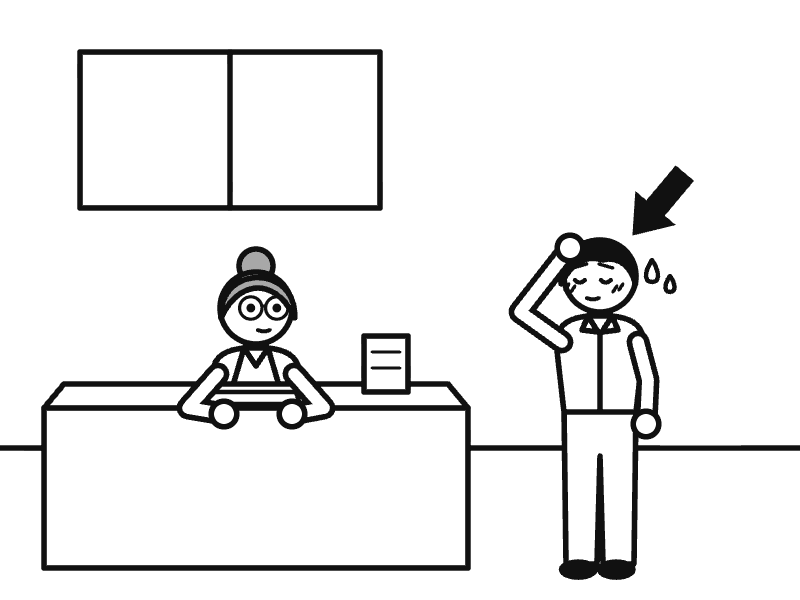
体(からだ)の調子(ちょうし)が悪(わる)いので、早(はや)く帰(かえ)りたいです。課長(かちょう)に何(なん)と言(い)いますか。

An office. A young man holding his forehead, looking unwell, stands beside the desk of an older female section manager who is looking up at him.
  1. 1. お先(さき)に失礼(しつれい)します。

    This is a goodbye when leaving, not a request for permission to leave early.

  2. 2. すみません、今日(きょう)は早(はや)めに帰(かえ)らせていただけませんか。Correct answer

    He needs to ask permission, and 帰らせていただけませんか is the polite way to ask to be allowed to leave. Choice 1 is what you say when leaving at the normal time, without asking.

  3. 3. 早(はや)く帰(かえ)ってもかまいませんよ。

    This is what the manager would say when giving permission.

Script

Narrator

体(からだ)の調子(ちょうし)が悪(わる)いので、早(はや)く帰(かえ)りたいです。課長(かちょう)に何(なん)と言(い)いますか。

You aren't feeling well and want to go home early. What do you say to your section manager?

Man

1. お先(さき)に失礼(しつれい)します。

I'll be leaving before you.

Man

2. すみません、今日(きょう)は早(はや)めに帰(かえ)らせていただけませんか。

Excuse me, could you let me go home early today?

Man

3. 早(はや)く帰(かえ)ってもかまいませんよ。

It's fine for you to go home early.

2番Question 2

Replay in the video

買(か)ったものを、友達(ともだち)にあげたいです。店(みせ)の人(ひと)に何(なん)と言(い)いますか。

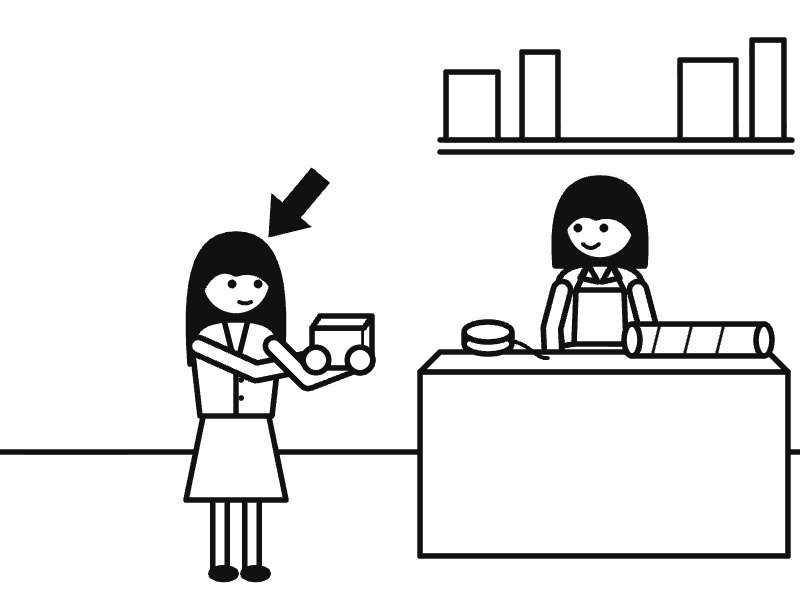
A gift shop counter. A woman customer holds out a small box to a female shop clerk behind the counter; a roll of wrapping paper and ribbons are on the counter.
  1. 1. プレゼント用(よう)に包(つつ)んでいただけますか。Correct answer

    包んでいただけますか politely asks the clerk to do the wrapping. Choice 2 is an offer to wrap it, which is what the clerk would say.

  2. 2. プレゼント用(よう)に包(つつ)んでさしあげましょうか。

    This offers to do the wrapping yourself; it's the clerk's line.

  3. 3. プレゼント用(よう)に包(つつ)んでもらいましたか。

    This asks about something in the past; it isn't a request.

Script

Narrator

買(か)ったものを、友達(ともだち)にあげたいです。店(みせ)の人(ひと)に何(なん)と言(い)いますか。

You want to give what you bought to a friend. What do you say to the shop clerk?

Narrator

1. プレゼント用(よう)に包(つつ)んでいただけますか。

Could you wrap it as a present?

Narrator

2. プレゼント用(よう)に包(つつ)んでさしあげましょうか。

Shall I wrap it as a present for you?

Narrator

3. プレゼント用(よう)に包(つつ)んでもらいましたか。

Did you have it wrapped as a present?

3番Question 3

Replay in the video

電車(でんしゃ)で座(すわ)りたいですが、席(せき)に人(ひと)のかばんが置(お)いてあります。何(なん)と言(い)いますか。

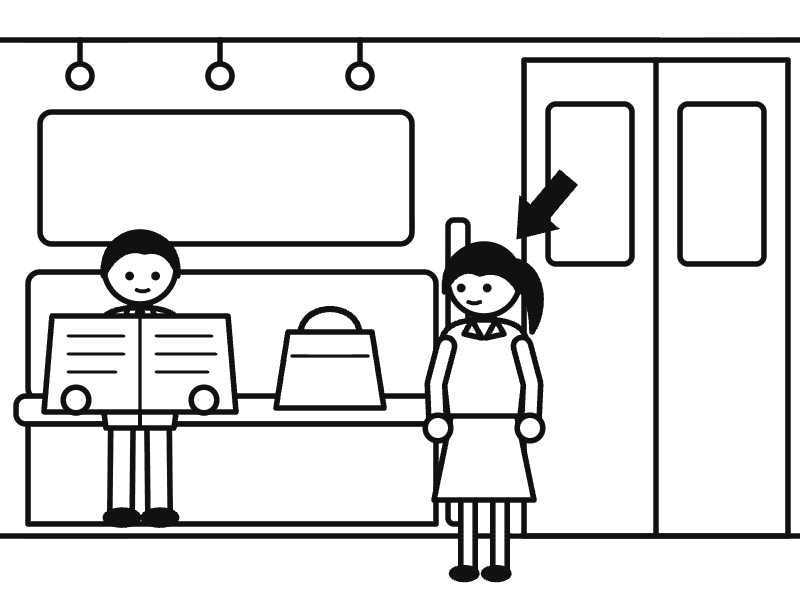
Inside a train. A woman stands in front of a bench seat. On the seat, beside a seated man reading a newspaper, is his bag taking up the empty space.
  1. 1. どうぞ、こちらに座(すわ)ってください。

    This offers a seat to someone else; she wants to sit herself.

  2. 2. 私(わたし)のかばん、ここに置(お)いてもいいですか。

    She wants to sit, not put down her own bag.

  3. 3. すみません、ここ、空(あ)いていますか。Correct answer

    Asking whether the seat is free is the natural, polite way to get the man to move his bag so she can sit. Choice 1 offers someone else a seat instead.

Script

Narrator

電車(でんしゃ)で座(すわ)りたいですが、席(せき)に人(ひと)のかばんが置(お)いてあります。何(なん)と言(い)いますか。

You want to sit down on the train, but someone's bag is on the seat. What do you say?

Woman

1. どうぞ、こちらに座(すわ)ってください。

Please, have a seat here.

Woman

2. 私(わたし)のかばん、ここに置(お)いてもいいですか。

May I put my bag here?

Woman

3. すみません、ここ、空(あ)いていますか。

Excuse me, is this seat free?

4番Question 4

Replay in the video

アパートの階段(かいだん)で、となりの部屋(へや)のおばあさんが重(おも)そうな荷物(にもつ)を持(も)っています。手伝(てつだ)いたいです。何(なん)と言(い)いますか。

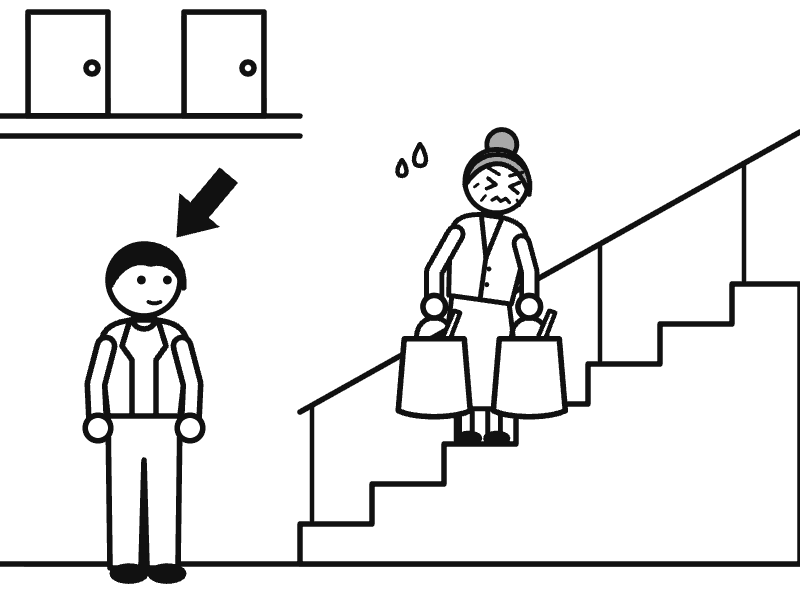
The outdoor stairs of an apartment building. An elderly woman is slowly climbing with two heavy shopping bags; a young man stands at the bottom of the stairs looking at her.
  1. 1. 重(おも)そうですね。持(も)っていただけませんか。

    This asks her to carry something for you instead of offering help.

  2. 2. よかったら、お持(も)ちしましょうか。Correct answer

    お持ちしましょうか is a polite offer to carry something for someone. Choice 1 asks her to carry something for him, the opposite direction.

  3. 3. 持(も)ってくださって、ありがとうございます。

    This thanks someone for carrying your things; nobody has helped you.

Script

Narrator

アパートの階段(かいだん)で、となりの部屋(へや)のおばあさんが重(おも)そうな荷物(にもつ)を持(も)っています。手伝(てつだ)いたいです。何(なん)と言(い)いますか。

On the stairs of your apartment building, the elderly woman from next door is carrying heavy-looking bags. You want to help. What do you say?

Man

1. 重(おも)そうですね。持(も)っていただけませんか。

Those look heavy. Could you carry them for me?

Man

2. よかったら、お持(も)ちしましょうか。

If you like, shall I carry those for you?

Man

3. 持(も)ってくださって、ありがとうございます。

Thank you for carrying them for me.

{問題|もんだい}5Quick response

1番Question 1

Replay in the video
  1. 1. わかりました。今日中(きょうじゅう)に読(よ)んでおきます。Correct answer

    読んでおいてもらえると助かる is an indirect request to read the handouts beforehand, so agreeing to read them is right. Choice 3 mixes up who is being asked to do the reading.

  2. 2. ええ、本当(ほんとう)に助(たす)かりましたね。

    Nothing has been done yet; he is asking for a favor.

  3. 3. はい、読(よ)んでもらってもいいですよ。

    This answers as if he were asking permission to have them read; he is asking you to read them.

Script

Man

来週(らいしゅう)の会議(かいぎ)の資料(しりょう)、読(よ)んでおいてもらえると助(たす)かるんだけど。

It would help me if you could read the handouts for next week's meeting beforehand.

Woman

1. わかりました。今日中(きょうじゅう)に読(よ)んでおきます。

Understood. I'll read them by the end of today.

Woman

2. ええ、本当(ほんとう)に助(たす)かりましたね。

Yes, that really helped, didn't it.

Woman

3. はい、読(よ)んでもらってもいいですよ。

Sure, it's fine to have someone read them.

2番Question 2

Replay in the video
  1. 1. え、もう帰(かえ)ったんですか。

    She is clearly still there talking to you.

  2. 2. え、まだ残(のこ)っているんですか。

    She is the one asking whether you are still here.

  3. 3. ええ、これを終(お)わらせたら帰(かえ)ります。Correct answer

    She is surprised the listener is still at work, so explaining when they'll leave is the natural reply. Choice 2 repeats her question back at her.

Script

Woman

あれ、まだ残(のこ)ってたの?もう九時(くじ)だよ。

Huh, you're still here? It's already nine o'clock.

Man

1. え、もう帰(かえ)ったんですか。

What, you've already gone home?

Man

2. え、まだ残(のこ)っているんですか。

What, are you still here?

Man

3. ええ、これを終(お)わらせたら帰(かえ)ります。

Yes, I'll go home once I finish this.

3番Question 3

Replay in the video
  1. 1. はい、召(め)し上(あ)がります。

    召し上がる is an honorific for other people's eating; you can't use it about yourself.

  2. 2. いえ、持(も)って帰(かえ)ります。Correct answer

    The clerk asks whether the customer will eat in, and saying it is for takeaway answers that. Choice 1 wrongly uses the honorific 召し上がる about oneself.

  3. 3. はい、いただきました。

    This is past tense and doesn't answer whether you'll eat here.

Script

Man

こちらで召(め)し上(あ)がりますか。

Will you be eating here?

Woman

1. はい、召(め)し上(あ)がります。

Yes, I will eat (using honorific language about myself).

Woman

2. いえ、持(も)って帰(かえ)ります。

No, I'll take it home.

Woman

3. はい、いただきました。

Yes, I've eaten.

4番Question 4

Replay in the video
  1. 1. うん、来(こ)ないよ。

    She is inviting you; from your side you'd say 行く, not 来る, and this sounds rude.

  2. 2. え、行(い)ったことないの?

    This mistakes the invitation for a question about experience.

  3. 3. 行(い)きたいんだけど、その日(ひ)はちょっと…。Correct answer

    来ない? here is an invitation, and choice 3 is a soft, polite refusal. Choice 1 echoes 来ない but uses the wrong verb for the speaker's own movement and sounds rude.

Script

Woman

今度(こんど)の土曜日(どようび)、みんなでバーベキューするんだけど、来(こ)ない?

We're all having a barbecue this Saturday. Won't you come?

Man

1. うん、来(こ)ないよ。

Yeah, I won't come.

Man

2. え、行(い)ったことないの?

What, you've never been?

Man

3. 行(い)きたいんだけど、その日(ひ)はちょっと…。

I'd like to go, but that day is a bit...

5番Question 5

Replay in the video
  1. 1. へえ、先生(せんせい)に借(か)りたんだ。Correct answer

    貸していただいた means the professor lent the book to the speaker, so 'you borrowed it from the professor' is right. Choice 2 reverses who gave and who received.

  2. 2. えっ、先生(せんせい)に貸(か)してあげたの?

    This reverses the direction: the professor lent it to him.

  3. 3. 先生(せんせい)、喜(よろこ)んでくれるといいね。

    This would fit if he were giving something to the professor.

Script

Man

この本(ほん)、山田(やまだ)先生(せんせい)に貸(か)していただいたんだ。

Professor Yamada kindly lent me this book.

Woman

1. へえ、先生(せんせい)に借(か)りたんだ。

Oh, so you borrowed it from the professor.

Woman

2. えっ、先生(せんせい)に貸(か)してあげたの?

What, you lent it to the professor?

Woman

3. 先生(せんせい)、喜(よろこ)んでくれるといいね。

I hope the professor is pleased.

6番Question 6

Replay in the video
  1. 1. ううん、待(ま)たせてないよ。

    待たせる is what the late person does; the one waiting can't say it about themselves.

  2. 2. ううん、私(わたし)も今(いま)来(き)たところ。Correct answer

    The kind reply to an apology for being late is 'I just got here too' (今来たところ). Choice 1 uses the causative 待たせる from the wrong person's point of view.

  3. 3. うん、待(ま)っちゃったね。

    This sounds as if she is the one who made someone wait.

Script

Man

ごめん、待(ま)たせちゃって。

Sorry for keeping you waiting.

Woman

1. ううん、待(ま)たせてないよ。

No, I didn't keep you waiting.

Woman

2. ううん、私(わたし)も今(いま)来(き)たところ。

No, I just got here myself.

Woman

3. うん、待(ま)っちゃったね。

Yeah, I ended up waiting, huh.

7番Question 7

Replay in the video
  1. 1. はい、ご記入(きにゅう)します。

    ご記入 is respectful language for the other person's action; you can't use it about yourself.

  2. 2. はい、ここに書(か)けばいいですか。Correct answer

    The receptionist politely asks the visitor to write their name, and checking where to write it is a natural reply. Choice 1 copies the receptionist's honorific ご記入, which is wrong about your own action.

  3. 3. はい、お名前(なまえ)をどうぞ。

    This is the receptionist's line, asking someone else for their name; you are the one writing.

Script

Woman

すみませんが、こちらにお名前(なまえ)をご記入(きにゅう)いただけますか。

Excuse me, but could you fill in your name here?

Man

1. はい、ご記入(きにゅう)します。

Yes, I will fill it in (with wrong honorific).

Man

2. はい、ここに書(か)けばいいですか。

Sure, should I write it here?

Man

3. はい、お名前(なまえ)をどうぞ。

Yes, your name, please.

8番Question 8

Replay in the video
  1. 1. じゃ、片付(かたづ)けておくね。

    He asked you not to put it away.

  2. 2. え、もう使(つか)わないの?

    He just said he will still use it.

  3. 3. あ、ごめん。じゃ、そのままにしておくね。Correct answer

    片付けないでおいて asks the listener to leave the plate where it is, so agreeing to leave it is right. Choice 1 does the opposite of what was asked.

Script

Man

あ、そのお皿(さら)、まだ使(つか)うから、片付(かたづ)けないでおいて。

Oh, I'm still going to use that plate, so leave it out.

Woman

1. じゃ、片付(かたづ)けておくね。

Then I'll put it away.

Woman

2. え、もう使(つか)わないの?

What, you're not using it anymore?

Woman

3. あ、ごめん。じゃ、そのままにしておくね。

Oh, sorry. I'll leave it as it is, then.

9番Question 9

Replay in the video
  1. 1. え、そうなの?全然(ぜんぜん)気(き)がつかなかった。Correct answer

    She passes on news she heard (らしい), so reacting with surprise fits. Choice 2 talks about the listener's own move, which is not what she said.

  2. 2. うん、来週(らいしゅう)引(ひ)っ越(こ)すつもりだよ。

    She is talking about the neighbor, not about you moving.

  3. 3. じゃ、引(ひ)っ越(こ)しを手伝(てつだ)ってもらおう。

    The neighbor has already gone, and nobody is moving here.

Script

Woman

隣(となり)の部屋(へや)の人(ひと)、先週(せんしゅう)引(ひ)っ越(こ)したらしいよ。

I heard the person next door moved out last week.

Man

1. え、そうなの?全然(ぜんぜん)気(き)がつかなかった。

Oh, really? I didn't notice at all.

Man

2. うん、来週(らいしゅう)引(ひ)っ越(こ)すつもりだよ。

Yeah, I'm planning to move next week.

Man

3. じゃ、引(ひ)っ越(こ)しを手伝(てつだ)ってもらおう。

Then let's get them to help us move.

Get ready for the N3

Learn the words, grammar and kanji the N3 tests, with daily reviews that bring back what you're about to forget.

About the app